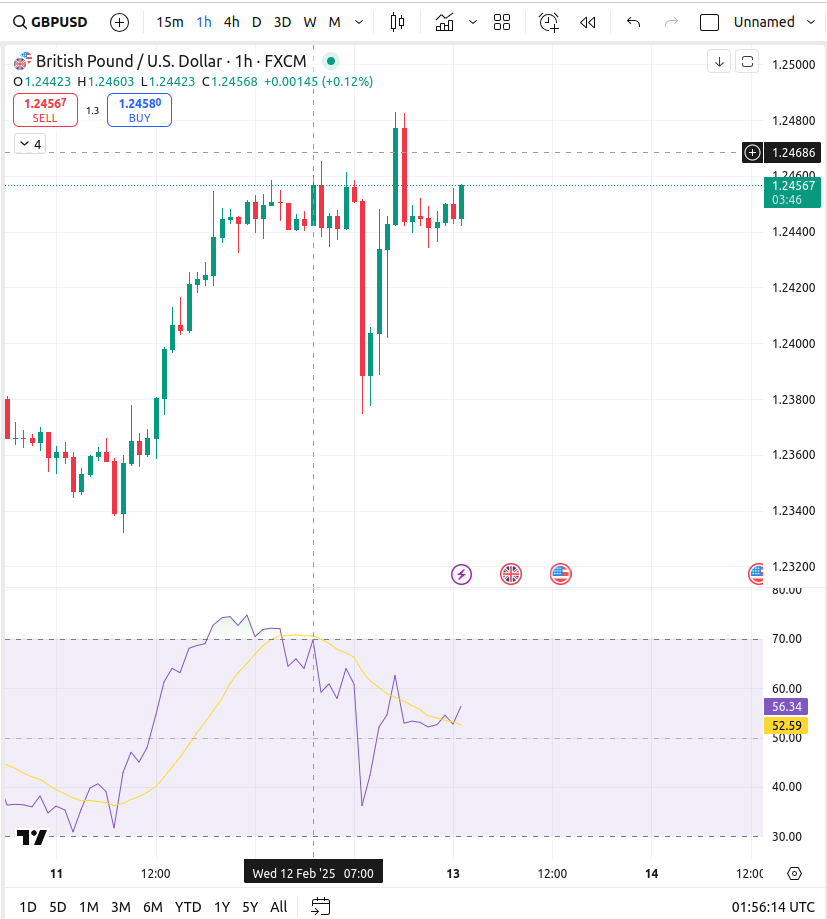
Explain the price action for me
The price action in this chart appears to depict a phase of consolidation following an earlier upward trend. Here’s a breakdown of what is visible:
1. Initial Uptrend:
The earlier part of the chart shows a strong bullish movement with green candles steadily increasing in price. This indicates buying pressure, suggesting optimism or a reaction to positive fundamentals.
2. Choppy Consolidation:
After the upward move, the candles become smaller, and there is a mix of green and red candles. The market appears to enter a consolidation phase, where neither buyers nor sellers dominate. Prices move sideways with smaller movements.
3. High Volatility Spike:
There is a notable spike with a long red candle followed by a strong recovery represented by a long green candle. This suggests a liquidity grab or a stop-loss hunt, where the price moves sharply to test levels of liquidity before reversing back. This might be due to news, a market maker’s activity, or traders taking profit.
4. Stabilization:
After the volatility spike, the candles become smaller again, indicating reduced momentum or indecision. The price is likely waiting for new catalysts or a breakout to decide the next direction. This price action is typical in markets where strong trends are followed by profit-taking and consolidation. A breakout from this consolidation range would indicate whether the previous uptrend will continue or reverse. Would you like me to suggest technical indicators or tools to better analyze this?
What should I do next?
1. Analyze the Key Levels
Support and Resistance: Mark the recent high (resistance) and low (support) of the consolidation range. If the price breaks above resistance, it may indicate a continuation of the uptrend (buy signal). If the price breaks below support, it may indicate a reversal or deeper pullback (sell signal). Look for wick rejections or strong candles near these levels to gauge market sentiment.
2. Use Indicators for Confirmation
Moving Averages (SMA 10, SMA 50, SMA 100): Check if the price is above/below key moving averages to confirm the trend direction. Bollinger Bands: See if the price is contracting (squeezing) within the bands. A breakout could follow the squeeze. RSI: If the RSI shows overbought or oversold conditions, it might give clues on potential reversals or continuations. Volume: Check if volume spikes accompany the breakout or breakdown.
3. Develop a Plan
Breakout Play:
Wait for the price to close above the resistance level with strong volume before entering a long position. Place a stop-loss below the breakout level to minimize risk.
Range Trading:
If the price continues consolidating, trade between the range’s support and resistance (buy at support, sell at resistance).
Wait-and-See:
If the price action is unclear, step back and wait for more decisive moves. Avoid forcing trades in choppy conditions.
4. Risk Management
Only risk a small percentage of your capital per trade (e.g., 1-2%). Set clear stop-loss and take-profit levels based on the range size or recent volatility. Adjust your position size to align with your risk tolerance.
5. Consider the Broader Context
Check higher timeframes (H4, D1) for the overall trend and significant levels. Be aware of any upcoming news or economic events that could increase volatility.