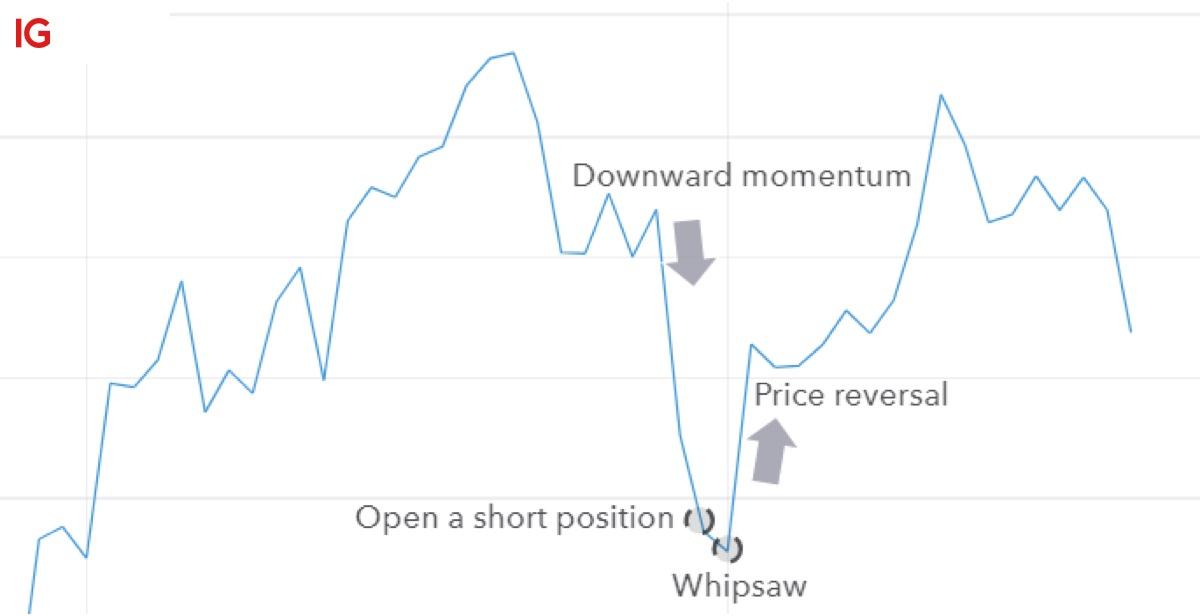
A whipsaw is a term used in trading to describe a situation where the price of an asset moves in one direction, giving a signal (like a breakout), and then quickly reverses, often causing traders to incur losses. It’s called a “whipsaw” because the motion resembles the back-and-forth cutting motion of a saw.
Key Characteristics of a Whipsaw:
-
- False Breakout or Breakdown:
Price breaks above resistance (or below support), giving the illusion of a new trend starting. It then reverses sharply, trapping traders who acted on the initial move.
-
- Occurs in Choppy Markets:
Whipsaws are common during sideways or low-volatility conditions, where no strong trend is established.
-
- Impact on Traders:
- Traders who enter positions based on the false signal often hit stop-losses as the price reverses.
- It leads to frustration and financial losses, especially for trend-followers or breakout traders.
Example of a Whipsaw
-
- Scenario: Let’s say Bitcoin is trading in a range between $30,000 (support) and $32,000 (resistance).
-
- Whipsaw Event:
- Price rises to $32,200, making it appear as if it’s breaking out.
- Traders buy, expecting further upside.
- Price quickly reverses and falls back below $32,000, then drops to $30,800.
-
- Result: Traders who bought during the breakout lose money as the price reverts into the previous range.
Why Do Whipsaws Happen?
-
- Indecision in the Market:
- Neither buyers nor sellers have dominance, so the price repeatedly reverses.
-
- Liquidity Hunting:
- Large institutions or “smart money” may drive prices beyond key levels to trigger stop-losses (for retail traders) or attract liquidity before reversing the trend.
-
- News Events or Volatility Spikes:
- Sudden news can cause sharp moves that quickly fade.
How to Avoid or Manage Whipsaws
-
- Avoid Trading in Choppy Markets:
Look for markets with clear trends or wait for a strong breakout confirmation.
-
- Use Wider Stop-Losses:
Tight stop-losses are more likely to be hit during whipsaws.
-
- Wait for Retests:
Before acting on a breakout, wait for the price to retest the breakout level (confirming it as support/resistance).
-
- Combine Multiple Signals:
- Use indicators like volume, RSI, or Bollinger Bands to confirm the strength of a breakout.
Why It Matters
Whipsaws can be emotionally draining and financially costly, especially for traders who frequently rely on breakout strategies. Recognizing potential whipsaw conditions can help you avoid unnecessary losses and make more informed trading decisions.
Ed Seykota has a song named whipsaws, what is the song about?
Ed Seykota’s song “Whipsaws” is a lighthearted and humorous take on the emotional rollercoaster and challenges that traders face in the market, particularly dealing with whipsaws—those sharp, sudden price reversals that can frustrate traders.
The song reflects Seykota’s philosophy on trading, encapsulating key lessons from his trend-following approach, such as:
-
- Accepting Market Unpredictability:
The song emphasizes the inevitability of whipsaws in trading. Seykota uses the term to describe not just price fluctuations but also the emotional toll they can take on traders who don’t have a disciplined strategy.
-
- Risk Management and Discipline:
It highlights the importance of cutting losses quickly and letting winners run, which is a core principle of trend-following. Whipsaws are a part of the process, and learning to navigate them without being emotionally attached is key.
-
- Staying Resilient:
Seykota’s message is to remain unfazed by whipsaws and maintain discipline in following a proven trading strategy. He famously says, “If you can’t take a small loss, sooner or later you’ll take the mother of all losses.”
-
- Humor and Perspective:
The song has a playful tone, showing how Seykota uses humor to convey the idea that trading should be taken seriously, but not too seriously. He often advocates for keeping a healthy emotional balance while trading.
The lyrics, combined with Seykota’s unique personality and philosophy, make it a memorable way of communicating fundamental trading lessons. It’s also a reminder that successful trading requires not just skills but also the right mindset and attitude to handle the inevitable ups and downs.